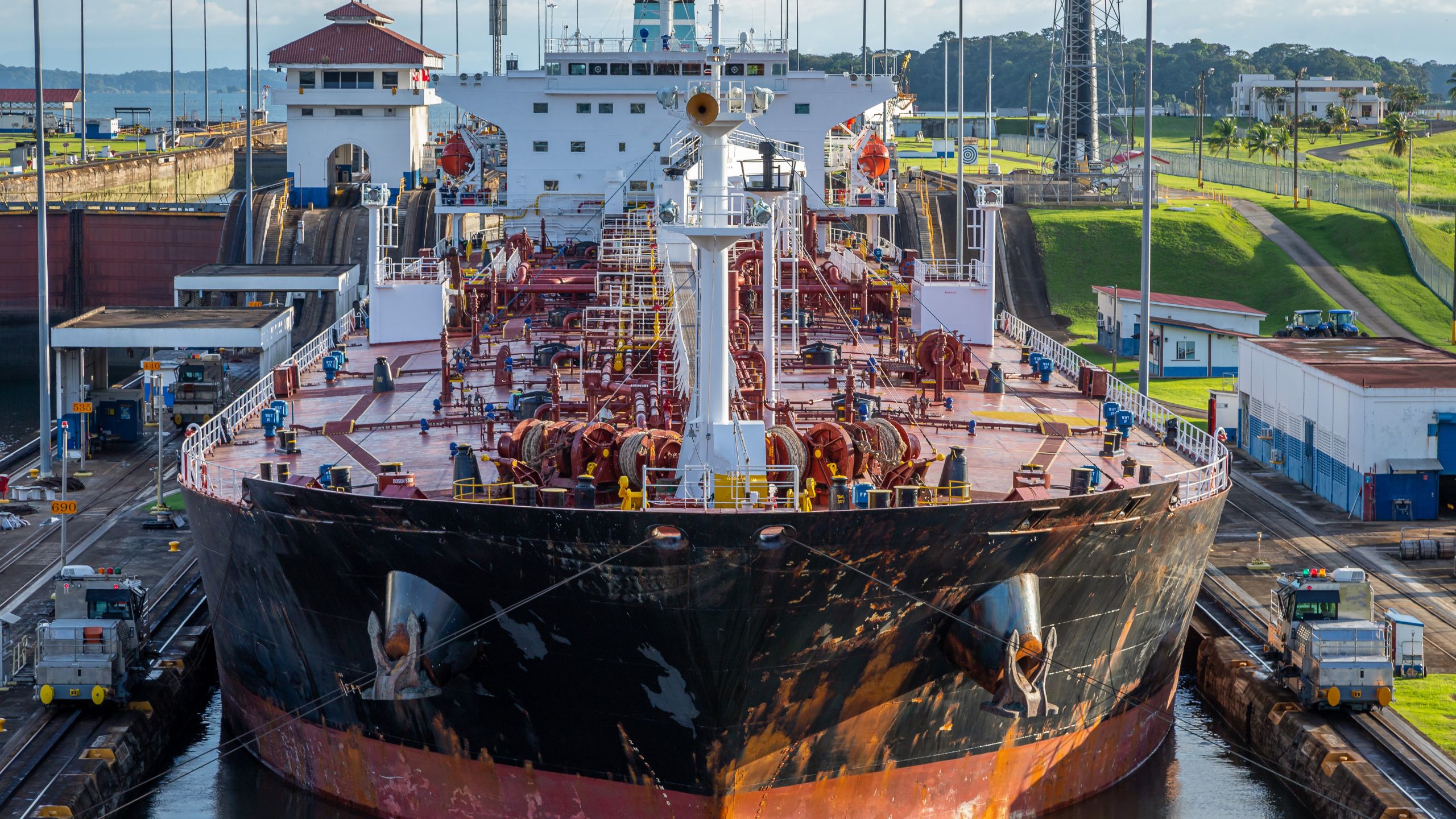
How Site Selection Works for Engineered Ship Recycling
Published on May 03, 2026 by FoilDock Panama
Selecting a location for a high-capacity ship recycling facility is an exercise in matching engineering requirements to geography, climate, and infrastructure. Here's how those criteria look when applied to Panama's Pacific coast — and why one preselected area near Puerto Armuelles continues to merit further evaluation.
Note on this article. The information below describes a site-suitability assessment process and the technical characteristics of one preselected area among several under preliminary study. It is not a project announcement, a commitment, or a confirmation of any final location. Any actual deployment in Panama would require coordination with the Panamanian Government, completion of an Environmental Impact Assessment (EIA), and the issuance of all corresponding permits. References to specific advantages reflect general site characteristics under evaluation and not guaranteed outcomes.
The Question Behind Site Selection
An engineered ship recycling facility is not a generic industrial plant. It is a piece of coastal infrastructure that has to satisfy a long list of overlapping requirements at once: deep-water access, stable weather, predictable tides, low storm risk, available land, energy supply, regulatory clarity, and proximity to international shipping lanes. A site that scores well on five of these and poorly on two is not a viable site. The criteria are non-negotiable.
This is why site selection for a facility using GREENDOCK® and FOILDOCK® technology is structured as a multi-stage process — beginning with a long list of candidate locations, narrowing through technical filtering, and ending in coordination with the host government before anything is committed. Panama offers several locations that pass the initial filters. One area on the Pacific coast, near Puerto Armuelles in the Barú district of Chiriquí Province, has emerged through that filtering process as a preselected candidate worth further evaluation.
What follows is a summary of the technical reasoning behind that preselection — not as a statement of intent, but as an illustration of how site-suitability analysis actually works for this type of facility.
Climate Risk: Why Latitude Matters
Tropical cyclones are the single largest weather-related risk to coastal industrial infrastructure in the broader Caribbean and Eastern Pacific basin. Engineered ship recycling facilities are designed to operate in stable conditions; a direct hurricane strike would shut operations down for an extended period and could damage assets that are expensive and slow to replace.
Panama's geography is unusually favorable on this point. The country sits well south of the latitudes where tropical cyclones typically form and travel — historically, hurricanes rarely descend below roughly the 12th parallel north. Puerto Armuelles sits near the 8th parallel, which places it outside the typical cyclone corridor on both the formation and the trajectory side. Climate change is expected to influence cyclone frequency and intensity over the coming decades, and ongoing monitoring is part of any responsible siting process — but the baseline latitude advantage is geographic and durable.
This is one of the reasons the Pacific coast of western Panama appears in the candidate set at all.
Tidal Range as an Energy Asset
The Pacific coast of Panama experiences a substantially larger tidal range than the Atlantic side. Tidal forecasts for the Puerto Armuelles area show sea-level differentials that can reach approximately 3.1 meters over a typical tidal cycle.
For a dry-dock-based recycling facility, tidal range is not just an oceanographic curiosity — it is potentially an energy asset. Filling and emptying a dry-dock basin is one of the more energy-intensive parts of the operational cycle. A site with a meaningful tidal differential allows part of that work to be done by gravity rather than by pumping, which can reduce both operating cost and the carbon footprint of the dock cycle. Whether and to what extent this advantage can be realized at any specific site depends on detailed bathymetric and engineering studies, but the underlying tidal characteristic is favorable in this region.
Wind: Direction Matters as Much as Speed
Wind data from the Puerto Armuelles area shows two characteristics that are useful for an industrial coastal facility:
Moderate average speeds. Sustained wind speeds in the area generally fall within the range that public meteorological references describe as a mild breeze to a fresh wind, rarely exceeding 20 km/h. This is consistent with stable working conditions for outdoor industrial activity. Predominantly offshore direction. The prevailing wind direction is offshore for much of the year. In the unlikely event of a contained operational incident, an offshore prevailing wind helps keep airborne material moving away from the inhabited coastline rather than toward it. This is a secondary safety layer, not a primary mitigation — primary mitigation is engineered containment — but it is a favorable site characteristic.
Stable Climate, Low Variability
Average temperature and rainfall in the Puerto Armuelles area are characterized by relatively low seasonal variation compared with many other tropical coastal sites. Stable thermal conditions and predictable rainfall patterns simplify both construction logistics and ongoing operations. They also reduce the engineering margin that has to be built in to handle extreme variability — which translates, downstream, into more efficient capital deployment.
Solar Irradiation and On-Site Energy
Panama's western Pacific coast, including the Puerto Armuelles area, receives among the highest solar irradiation values in the country. For a facility that is designed to minimize its carbon footprint, this matters in two ways.
-
First, an on-site solar generation capability — potentially in the range of tens of megawatts, subject to detailed feasibility study and grid interconnection arrangements — could supply a meaningful share of the facility's own energy needs. Reducing reliance on imported grid power directly reduces the operational carbon footprint per tonne of steel recovered.
-
Second, surplus generation, where applicable and subject to applicable regulations and grid agreements, could potentially be exported to the national grid. The structure of any such arrangement would depend on Panamanian energy policy and the specific terms negotiated at the time of project development, and is not assumed in this preliminary assessment.
Land Characteristics and Expansion Options
The preselected area under study presents several characteristics that align with the technical requirements of a FOILDOCK® deployment:
Adequate sea depth relatively close to the coastline.
Low sediment load in the surrounding waters, which reduces dry-dock gate maintenance costs over time. Local topography that, in principle, could provide fill material for the marine works required to position the dry-dock structures. Sufficient land area to accommodate not only the initial deployment but potential future phases — including a possible third or fourth dry-dock unit if regional demand warrants expansion.
Proximity to designated free-trade and special-development zones, which may simplify certain logistics and regulatory pathways. Specific arrangements would be subject to applicable Panamanian law and government coordination. The area in question has not been used intensively for agriculture or cattle production, which simplifies environmental baseline assessment. Any acquisition or use of land would, of course, depend on willing-seller arrangements with current owners and full compliance with Panamanian property law.
Synergy Possibilities
One of the more interesting characteristics of the preselected area — though, again, entirely conditional on further study and on commercial agreements that have not been concluded — is the possibility of co-locating complementary industrial activity on adjacent land. Examples that have been raised in preliminary internal analysis include:
A small-scale steel processing facility that could transform recovered scrap into ingots, billets, or reinforcing bar. Local transformation of scrap reduces export freight costs and adds value within Panama.
- A re-milling facility for steel sheets recovered from vessel hulls, allowing direct supply to industrial buyers requiring flat plate stock.
- A multimodal deep-water port for containerized or bulk cargo, sized to match observed demand and capable of phased expansion.
These remain conceptual possibilities rather than committed plans, and none of them would proceed without their own independent feasibility studies, partnerships, and regulatory approvals.
Environmental Compensation: Mangroves and Blue Carbon
Any responsible coastal industrial project in this region needs to address its environmental footprint not only through engineered containment but through ecosystem-level measures. Mangrove conservation and restoration projects in the surrounding coastal zone are an established mechanism for generating verified Blue Carbon credits, which can compensate for the residual carbon footprint of operations and, where credits exceed internal needs, potentially be sold into voluntary carbon markets.
Whether and how such a program would be structured at any specific site would depend on independent verification, applicable Panamanian environmental regulation, and recognized international Blue Carbon methodologies. It is mentioned here as a category of mitigation under consideration in site-suitability analysis, not as a guaranteed outcome.
What Comes Next
Preselection is the beginning of a process, not the end of one. Any project that ultimately proceeds at any specific site in Panama would require, at minimum:
- Coordination and agreement with the Panamanian Government on the definitive location.
- A full Environmental Impact Assessment (EIA) in accordance with Panamanian law.
- The issuance of all required construction, operational, and environmental permits.
- Detailed engineering and bathymetric studies specific to the chosen location.
- Final commercial and licensing arrangements between the involved parties.
The role of preliminary site-suitability analysis is to ensure that, by the time these later-stage processes begin, the candidate location is one where the underlying physics, climate, and geography are clearly favorable. The Puerto Armuelles area, on the basis of the characteristics summarized above, meets that threshold and remains under active evaluation alongside other Panamanian options.
The Bigger Picture
Site selection for engineered ship recycling is not, in the end, about any single location. It is about whether the global industry can build a network of compliant, high-capacity facilities in the right places to absorb the rising volume of end-of-life vessels and feed the recovered steel back into a decarbonizing economy. Panama's geographic advantages — its position relative to global shipping lanes, its latitude relative to cyclone risk, its tidal characteristics on the Pacific side, and its institutional experience in maritime affairs — make it a serious candidate to host part of that network.
Which specific Panamanian site, on what timeline, and under what structure are questions that will be resolved through the proper channels and in the proper sequence. This article is intended only to explain the engineering logic that informs how those questions are approached.
For a sense of the broader policy and resource context that shapes the demand for this kind of infrastructure, the OECD's overview of material resources and the circular economy is a useful reference.
This article is informational and reflects preliminary technical analysis as of its publication date. It does not constitute a project announcement, an offer, a commitment, or a representation regarding any specific outcome. All project activity in Panama is subject to coordination with the Panamanian Government, full regulatory compliance, and the completion of all required environmental and permitting processes. GREENDOCK® and FOILDOCK® are referenced as the patented technologies under which any such project would be deployed; FoilDock Panama operates under sub-licensing rights for the LATAM region.
Share this article
Written by
FoilDock Panama
Intelligence Briefing
Subscribe for exclusive analysis on maritime regulations, global steel markets, and sustainable industrial practices.