Sustainable Ship Recycling and the Circular Economy | FoilDock
Published on May 03, 2026 by FoilDock Panama
The global push to recover materials, decarbonize heavy industry, and rethink supply chains runs straight through the world's shipyards — and Panama is positioned to lead it.
Every year, hundreds of ocean-going vessels reach the end of their working lives. What happens next has, for decades, been one of the maritime industry's least-discussed problems: most of those ships ended up on tidal beaches in South Asia, dismantled by hand, with predictable consequences for workers, coastlines, and the quality of the steel recovered.
That model is on its way out — not because of sentiment, but because the global economy can no longer afford it. The materials locked inside an end-of-life Panamax vessel are too valuable, too carbon-intensive to replace through fresh mining, and too central to the energy transition to be wasted on contaminated, low-grade scrap. Ship recycling is no longer a disposal industry. It's a resource industry.
The Resource Picture: Why This Matters Beyond Shipping
The OECD has been tracking the macro trend for years. Their work on material resources and the circular economy lays out a stark reality: global consumption of raw materials has risen exponentially in recent decades, and the pressure on extraction, processing, and waste systems is now central to the triple planetary crisis of climate change, pollution, and biodiversity loss.
Two findings from that body of research are particularly relevant to ship recycling:
-
Recycled metal dramatically outperforms virgin metal on energy and carbon. Producing common metals from recycled material uses between 60 and 97 percent less energy than producing them from mined ore, depending on the metal. For steel — the dominant material in any ocean-going hull — this is the difference between a high-emission industrial input and a near-decarbonized one.
-
Critical raw material demand is rising sharply. The transition to a low-carbon economy requires enormous volumes of metals, including the steel that builds wind turbines, EV plants, transmission infrastructure, and the next generation of green vessels themselves. Closing the loop on the materials already in circulation is no longer optional — it's a supply-security question as much as an environmental one.
In other words, the world doesn't just need more steel. It needs cleaner steel, recovered at scale, with documented provenance and minimal contamination. That is precisely what an engineered dry-dock dismantling system is built to deliver.
Why the Old Model Doesn't Fit the New Economy
Beaching — running a vessel onto an intertidal flat and cutting it apart where it lies — was never engineered. It was improvised. The economics worked because labor was cheap, regulation was loose, and the cost of the resulting pollution was paid by someone else: the workers, the local fisheries, the coastline.
That arrangement is unraveling on several fronts at once. Carbon-conscious steel buyers — automotive OEMs, green construction, renewable energy manufacturers — increasingly require traceable, low-contamination scrap. Insurance and finance for cash-buyer beaching deals is harder to obtain. The Hong Kong Convention on safe ship recycling, alongside EU and IMO regulatory pressure, is steadily narrowing the space in which substandard yards can operate. And the inherent waste of the beaching model — oils, asbestos, paint solids, and structural steel mixed together on open sand — leaves significant economic value on the table.
The replacement is not a tweaked version of the old approach. It's a different kind of facility entirely.
What "Engineered Containment" Actually Means
The FoilDock system, licensed from GreenDock, treats ship dismantling as a controlled industrial process rather than a salvage operation. A few elements distinguish it:
- A stable, enclosed dry-dock platform. The vessel is dismantled in a basin engineered for drainage, runoff capture, and worker safety — not on a tidal beach where conditions change twice a day.
- Hazardous material protocols handled first. Asbestos, NORM (naturally occurring radioactive material), oily sludge, residual fuels, and other regulated waste streams are removed at dedicated stations before structural cutting begins, rather than mixed into the general waste flow.
- Mechanical cutting under controlled conditions. Precise dismantling produces cleaner steel sections with less contamination, which is what high-grade re-rolling mills and green-steel buyers actually want.
- Closed-loop residue capture. The goal is full recovery of process residues, not dispersion into the surrounding environment. The output is steel scrap of a quality that fits the circular economy's actual requirements: traceable, low-contaminant, and produced without exporting the environmental cost to the host country's coastline.
Panama's Strategic Position
Geography matters here. Panama sits at one of the densest concentrations of maritime traffic on the planet, with an established shipping registry, deep institutional experience in vessel operations, and direct access to Atlantic and Pacific tonnage. For an industry that needs to dismantle ships at scale, in a regulated environment, close to major trade lanes, the case for Latin America — and specifically for Panama — is straightforward.
FoilDock Panama operates under exclusive sub-licensing rights for the LATAM region, deploying GreenDock's patented IP through an "infrastructure as a platform" model. The intent is not a single yard, but a replicable, standardized framework that port authorities and industrial partners across the region can implement to meet rising demand for compliant, high-capacity dismantling capacity.
The Cradle-to-Cradle Logic, Applied to Heavy Industry
The phrase "circular economy" can sound abstract until you apply it to a 70,000-tonne steel object floating off the coast. Then it gets very concrete. A ship is, in resource terms, a temporary configuration of materials — steel, copper, aluminum, electronics, and increasingly batteries — that has been shaped for one use and is waiting to be reshaped for the next. Whether those materials re-enter the global economy as green inputs or as contaminated waste depends almost entirely on the facility that takes them apart.
This is the case the OECD has been making at the policy level: that resource efficiency, recycling infrastructure, and the trade in recovered materials are not side issues to climate policy — they're a load-bearing part of it. Closing the loop on shipping's enormous embedded steel inventory is one of the largest single contributions heavy industry can make to that loop.
The Bottom Line
Ship recycling has spent most of its history as an afterthought to shipbuilding. That era is ending. As steel buyers tighten provenance requirements, as regulators close gaps in the old offshore-disposal model, and as the energy transition keeps driving demand for recycled inputs, the facilities that can dismantle vessels cleanly, safely, and at scale move from the margin of the industry to the center of it.
For partners, port authorities, and investors evaluating where this capacity gets built, the question is no longer whether the industry is shifting to a circular model. It is where the standard-setting infrastructure for that shift will be located. Panama is one of the strongest answers to that question — and a globally compliant, patent-protected dry-dock platform is the form that answer takes.
For the broader macro context, the OECD's overview of material resources is a clear introduction to the policy and economic forces driving this transition. For a conversation about deploying compliant ship-recycling infrastructure in the LATAM region, get in touch with our team.
Share this article
Written by
FoilDock Panama
Intelligence Briefing
Subscribe for exclusive analysis on maritime regulations, global steel markets, and sustainable industrial practices.
Related Articles
Beyond the Beach: Why the "Cradle-to-Cradle" Model is the Future of Global Shipping
But as we move through 2026, the maritime industry is undergoing a "vibe shift." The old linear model of Build, Use, Abandon is being replaced by a sophisticated, circular philosophy: Cradle-to-Cradle.
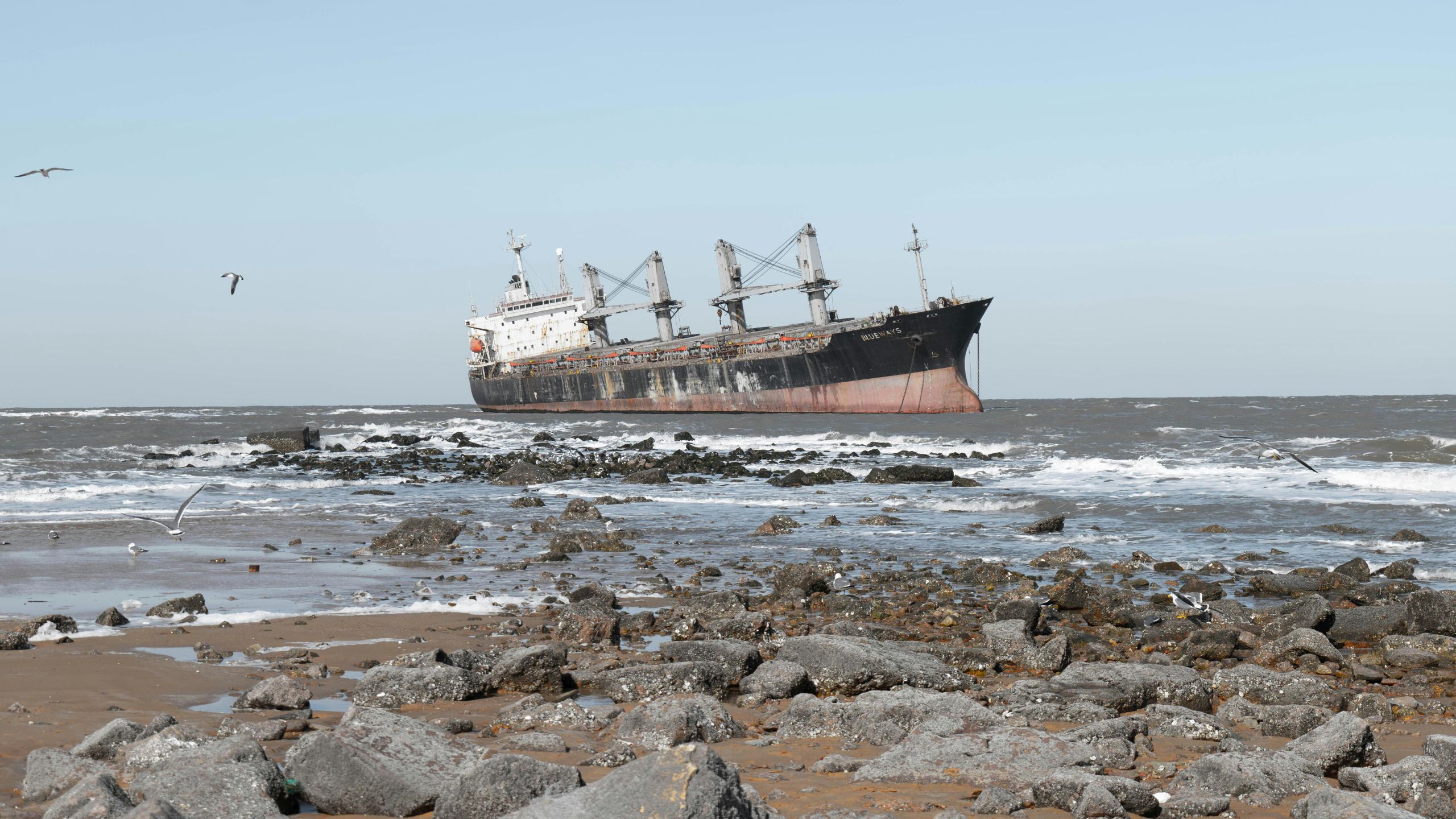
Panama’s Green Horizon: Leading the Global Transition to Sustainable Ship Recycling
For decades, the maritime industry has faced a difficult question: What happens to a ship at the end of its life? Traditionally, the answer involved "beaching" practices in South Asia—methods that, while efficient, often come at a staggering cost to the environment and worker safety.